The Ultimate Guide to Translation Services in Miami FL: Everything You Need to Succeed Globally
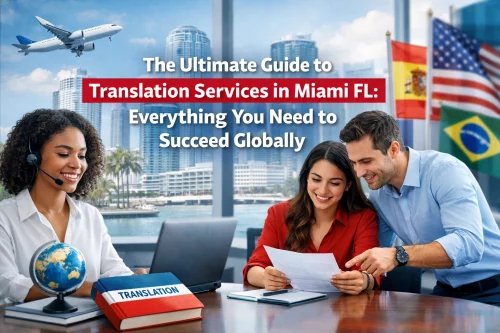
Miami has long established itself as the premier gateway to the Americas: a vibrant, multilingual metropolis where international commerce and diverse cultures intersect daily. For businesses and individuals operating in this dynamic environment, the need for high: quality translation services in Miami FL is not merely a convenience but a fundamental requirement for success. Navigating the complexities of global communication requires more than just a passing familiarity with a second language; it demands a sophisticated understanding of cultural nuances, legal requirements, and industry: specific terminology. Whether you are a law firm in Brickell handling cross: border litigation or a tech startup in Wynwood looking to scale into European markets, the right linguistic partner can make the difference between a seamless expansion and a costly misunderstanding. The landscape of professional communication in South Florida is uniquely shaped by its geography and its demographics. As a hub for international finance, healthcare, and tourism, the demand for a reliable Miami translation service spans across various sectors, each with its own set of rigorous standards. Achieving global success means ensuring that your message remains consistent and authoritative across every language barrier. At International Translations USA, we understand that translation is an art form backed by scientific precision. It involves a deep dive into the source material to extract meaning and then reconstructing that meaning in a target language so that it resonates with the local audience while maintaining the integrity of the original document. When considering the various translation services available in the region, it is essential to recognize the specialized nature of different document types. Legal translation, for instance, is one of the most critical areas for Miami: based entities. In a city where international contracts and judicial proceedings are common, the accuracy of a translated legal document can have significant financial and legal implications. Professional linguists must be well: versed in the legal systems of both the source and target countries: ensuring that terms like “force majeure” or “indemnification” are not just translated literally but are placed within their proper legal context. This level of expertise is what sets professional agencies apart from automated tools or generalist translators. Furthermore, the role of USCIS certified translation services Miami cannot be overstated for the city’s large immigrant and international business community. For those applying for residency, citizenship, or work visas, the United States Citizenship and Immigration Services maintains strict standards for the translation of foreign documents. Birth certificates, marriage licenses, and academic transcripts must be accompanied by a formal certification from the translator or the agency, affirming the accuracy and completeness of the work. Engaging with an experienced provider ensures that these documents meet federal requirements on the first submission: avoiding unnecessary delays or rejections that could disrupt lives and business operations. Beyond the legal and immigration spheres, the healthcare industry in South Florida represents another sector where precision is a matter of life and safety. Miami is home to world: class medical facilities that attract patients from across the globe. Translating medical records, pharmaceutical instructions, and clinical trial data requires a linguist with specific subject matter expertise. A minor error in a dosage instruction or a patient’s medical history can lead to catastrophic results. Therefore, choosing a translation service that prioritizes medical accuracy and maintains strict confidentiality protocols is vital for healthcare providers looking to maintain their reputation and provide the best possible care to their international clientele. The technical and digital sectors also face unique challenges when expanding into new territories. As companies in the Doral logistics hub or the financial district of Coral Gables look toward global markets, they must adapt their technical manuals, software interfaces, and marketing collateral for diverse audiences. This process: often referred to as localization: goes beyond simple translation by adapting the content to the cultural, functional, and linguistic expectations of a specific target market. For example, a marketing campaign that works well in Miami’s Cuban: influenced Spanish might require significant adjustment to resonate with an audience in Madrid or Mexico City. A professional Miami translation service provides the cultural insight necessary to navigate these subtle but significant differences. One of the most common questions businesses ask is whether they should hire an individual freelance translator or partner with an established agency. While freelancers can offer personalized service, agencies like International Translations USA provide a layer of quality assurance and project management that is difficult to replicate independently. Agencies typically employ a multi: step process involving initial translation, editing by a second linguist, and a final proofreading stage. This rigorous approach minimizes the risk of human error and ensures that the final product is polished and professional. Additionally, agencies have the resources to handle large: scale projects with tight deadlines: leveraging a network of specialists across hundreds of language pairs. Quality control in the translation industry is often backed by professional affiliations and certifications. When searching for a partner, looking for providers associated with ATA translation services serves as a hallmark of quality. The American Translators Association sets high benchmarks for ethics and competence within the industry. By choosing an agency that adheres to these standards, clients can be confident that their projects are being handled by professionals who are committed to continuous improvement and best practices. This commitment to excellence is what builds trust: a foundational element in any long: term business relationship. The rise of artificial intelligence and machine translation has changed the way many perceive the industry, yet the human element remains indispensable for high: stakes communication. While AI tools can provide a general gist of a text, they often fail to capture nuance, sarcasm, or complex technical relationships within a sentence. For businesses aiming for global success, relying solely on machine output can lead to embarrassing cultural blunders or legal vulnerabilities. The most effective strategy involves a hybrid approach: where advanced technology is used to assist the human translator, but the final oversight and creative decision: making remain firmly in the hands of a skilled linguist who understands the target audience’s heart and mind. For those ready to take their next
Language Access Laws in Healthcare: What Miami Hospitals and Patients Need to Know
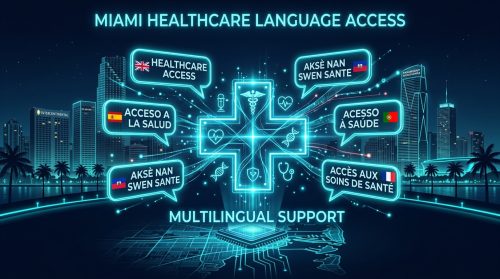
If you’ve ever needed to explain a diagnosis, navigate a discharge form, or give informed consent in a language that isn’t your native tongue, you already understand the stakes. In Miami — one of the most linguistically diverse cities in the United States — the intersection of language and healthcare is not a minor operational detail. It’s a matter of life and death. Federal law is clear on this point: healthcare providers who receive federal funding must provide language access services to patients with Limited English Proficiency (LEP). But many patients don’t know their rights, and some providers still fall short of compliance. This guide breaks down what the law requires, what Miami hospitals and clinics must do, and how professional medical interpreters and translators make the difference when it matters most. What Is “Limited English Proficiency” (LEP)? The term Limited English Proficiency refers to individuals who do not speak English as their primary language and have a limited ability to read, speak, write, or understand English. In Miami-Dade County, this describes a significant portion of the population. According to U.S. Census data, more than 70% of Miami-Dade residents speak a language other than English at home. Spanish is by far the most common, but Haitian Creole, Portuguese, French, Mandarin, and dozens of other languages are also spoken throughout neighborhoods like Hialeah, Little Havana, Little Haiti, Brickell, and Doral. For these residents, navigating a hospital or clinic in English is not simply inconvenient — it can result in misdiagnosis, improper medication use, delayed care, and preventable medical errors. The Federal Framework: Title VI of the Civil Rights Act The cornerstone of language access law in healthcare is Title VI of the Civil Rights Act of 1964, which prohibits discrimination based on national origin by any program or activity receiving federal financial assistance. In 1974, the U.S. Supreme Court ruled in Lau v. Nichols that failing to provide language access to LEP individuals constitutes national origin discrimination under Title VI. The U.S. Department of Health and Human Services (HHS) has issued guidance making clear that: Virtually every hospital, emergency room, clinic, and community health center in Miami that accepts Medicare or Medicaid funding — which is nearly all of them, including Jackson Memorial Hospital, Baptist Health South Florida, and Miami-Dade’s network of federally qualified health centers — is subject to Title VI. The ACA’s Section 1557: Stronger Protections for LEP Patients The Affordable Care Act added another layer of protection. Section 1557 of the ACA, the health equity provision, explicitly prohibits discrimination in healthcare based on national origin (among other protected characteristics). The implementing regulations require covered healthcare programs to: For Miami providers, this means Spanish and Haitian Creole are at minimum required in most posted notices and frequently translated documents. Many facilities also include Portuguese, French, and other languages common to their specific patient population. Florida State Protections for LEP Healthcare Patients Florida adds its own requirements on top of federal law. The Florida Patient’s Bill of Rights and Responsibilities (Section 381.026, Florida Statutes) guarantees patients the right to receive information in a manner they can understand. This applies broadly — including to patients who have communication barriers due to language. Florida Medicaid managed care plans are required to provide interpreter services for enrollees. The Florida Department of Health has also issued guidance encouraging healthcare providers to maintain internal protocols for language access, including: The “Family Member” Problem Despite what federal and state law says, one of the most common compliance failures in Miami healthcare is the use of family members — often children — as interpreters. This practice is sometimes called ad hoc interpretation, and it carries serious legal and clinical risks. Under HHS guidance, covered healthcare providers should not use minor children as interpreters for clinical purposes. And using a patient’s adult family member is only permissible when the patient explicitly requests it and it won’t compromise the quality of care or privacy. The problems with family interpreters are well-documented: A professional medical interpreter — especially one trained in clinical interpretation standards — eliminates these risks entirely. What “Qualified Interpreter” Really Means Federal law requires a qualified interpreter, but what does that mean in practice? HHS defines a qualified interpreter as someone who: For complex medical encounters — oncology consultations, psychiatric evaluations, surgical consent discussions, labor and delivery — professional medical interpreters certified by organizations like the Certification Commission for Healthcare Interpreters (CCHI) or the National Board of Certification for Medical Interpreters (NBCMI) are the gold standard. At International Translations USA, our medical interpreters are trained in clinical terminology across specialties including emergency medicine, cardiology, oncology, obstetrics, and psychiatry. We serve facilities across Miami-Dade County — from Jackson Memorial Hospital and Hialeah Hospital to community clinics in Wynwood and Coral Gables — with both on-site and remote (video or phone) interpretation. What Miami Healthcare Providers Must Have in Place If you operate a healthcare practice, clinic, or hospital in Miami, here’s a practical compliance checklist: 1. Language Identification at IntakeAsk every patient their preferred language. Use a “I Speak” language identification card or card deck if needed. Document the language preference in the patient record. 2. Access to Qualified InterpretersHave a contract or on-call arrangement with a qualified medical interpretation service. This should include on-site interpreters for high-volume languages and phone/video interpretation for less common languages. 3. Translation of Vital DocumentsConsent forms, discharge instructions, patient rights notices, and medication instructions should be available in the languages most commonly needed by your patient population. At minimum: Spanish and Haitian Creole for most Miami providers. 4. Staff TrainingClinical and administrative staff should understand the language access policy and know how to request interpreter services. They should never pressure patients to use family members to avoid calling an interpreter. 5. Posted NoticesSection 1557 requires posting notices of nondiscrimination and language assistance availability in common areas and patient-facing materials, in the top 15 languages spoken in Florida. 6. No-Cost ServicesLanguage access services must be provided free of charge to the patient. Billing a patient for an interpreter or translator is prohibited. Consequences of Non-Compliance Healthcare providers who fail to meet language access requirements
USCIS Certified Translation Miami: What You Need & How to Get It Fast
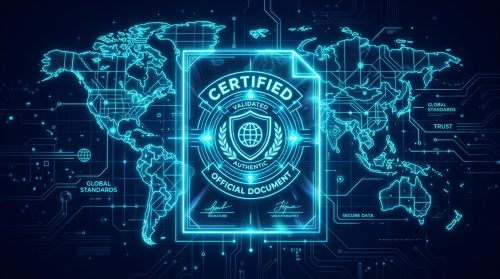
If you are applying for a green card, visa, citizenship, or any other immigration benefit through U.S. Citizenship and Immigration Services (USCIS), you already know the paperwork is extensive. What many applicants do not realize until it is too late is that every foreign-language document you submit — birth certificate, marriage certificate, diploma, court record — must be accompanied by a certified English translation. And not just any translation. USCIS has specific requirements for what qualifies as a “certified translation,” and rejections due to non-compliant translations are frustratingly common. At International Translations USA (ITU), our team has helped thousands of Miami-area immigrants and their attorneys navigate this process smoothly. Here is everything you need to know about USCIS certified translation in Miami — and how to get it done right. What Does USCIS Mean by “Certified Translation”? Under 8 CFR 103.2(b)(3), USCIS requires that any document in a foreign language be accompanied by a full English translation that the translator certifies is complete and accurate. The translator must also certify that they are competent to translate from the source language into English. Critically, this is not the same as a notarized translation. USCIS does not require notarization — they require a translator’s certification statement. The statement must include: Our certified translation services follow this format precisely, ensuring USCIS acceptance on the first submission. Which Documents Require USCIS Certified Translation? Almost any foreign-language document submitted as supporting evidence will need a certified translation. The most commonly requested documents include: Vital Records & Civil Documents Educational & Professional Records Legal & Court Documents If you are working with an immigration attorney in Brickell or downtown Miami and are unsure whether a specific document needs translation, our team is available to advise — just contact us for a quick consultation. Why USCIS Rejects Translations — And How We Prevent It Translation rejections add weeks or months to an already lengthy immigration process. Here are the most common reasons USCIS rejects a translation, and how we address each one: 1. Incomplete Translations Many translators skip seals, stamps, handwritten annotations, or marginalia — treating them as unimportant. USCIS expects a complete translation of every element on the document, including stamps and signatures. Our linguists translate all elements, with a notation such as “[Official Seal of the Civil Registry of Havana]” for elements that cannot be directly translated. 2. Missing or Deficient Certification Statement A common shortcut is to use a brief one-line certification that omits required elements. We use a standardized certification block that covers all USCIS requirements, which means our translations are accepted on first submission. 3. Machine Translation Submissions Using Google Translate or AI-based tools and then having someone “certify” the output is both ineffective and potentially fraudulent. USCIS has become increasingly skilled at identifying machine-translated content. Our translations are produced by human linguists — native speakers with immigration translation expertise. 4. Translator Not Competent in the Subject Matter Legal and government document translation requires specialized vocabulary. A general translator who handles marketing copy may not accurately render legal terminology in a court disposition or divorce decree. Our team includes translators with specific expertise in legal, civil, and government documentation. How Much Does USCIS Certified Translation Cost in Miami? Translation pricing varies based on language pair, document length, and turnaround time. In Miami’s diverse immigrant communities — particularly in Hialeah, Doral, Little Havana, and Coral Gables — we regularly translate documents from Spanish, Portuguese, Haitian Creole, French, Arabic, Mandarin, Vietnamese, and dozens of other languages. Most standard vital records (birth, marriage, death certificates) are priced per page. Multi-page legal documents and academic records are typically quoted based on word count. We provide transparent quotes before you commit. Rush translation is available for time-sensitive filings. We regularly assist clients with same-day and 24-hour turnaround for urgent USCIS submissions. Do I Need an Apostille or Notarization Along With the Translation? This is one of the most common questions we receive. The short answer: it depends on the receiving authority. For USCIS specifically: notarization of the translation is not required — only the translator’s certification statement as described above. However, the original document may require an apostille from the issuing country’s government if that country is a signatory to the Hague Apostille Convention. The translation itself does not need an apostille for USCIS. For other uses — courts, state agencies, foreign government bodies — notarization or apostille of the translation may be required. We offer apostille services and can arrange notarized translations when needed for non-USCIS use. How Long Does USCIS Certified Translation Take? Standard turnaround for most immigration documents is 24–48 business hours. For complex multi-page documents or rare language pairs, we typically quote 3–5 business days. Rush service (same-day or next-business-morning) is available for most common languages including Spanish, Portuguese, Haitian Creole, French, and others frequently needed in the Miami market. We recommend ordering translations before you file your USCIS forms, so there is no delay waiting for paperwork to catch up. If you are already mid-process and have a deadline approaching, call us directly at (305) 747-5996 — our team can often accommodate urgent requests. How to Order USCIS Certified Translation From ITU in Miami The process is straightforward: A Note for Immigration Attorneys in Miami We work closely with immigration law firms throughout Miami, from solo practitioners in Little Havana to large firms in Brickell and the downtown legal corridor. If you are managing high-volume USCIS filings, ask us about volume pricing, direct billing accounts, and expedited processing arrangements. We become an extension of your practice — reliable, accurate, and fast. Get Your USCIS Certified Translation Today Do not let a translation issue delay your immigration case. International Translations USA has been providing USCIS-accepted certified translations in Miami for years, serving immigration applicants, attorneys, families, and businesses across all 50 states. Need certified translation services in Miami? Contact International Translations USA today — call (305) 747-5996 or request a free quote online. We translate 120+ languages and dialects with fast turnaround and guaranteed USCIS acceptance.
Apostille Services Miami: How to Authenticate Your Foreign Documents for International Use
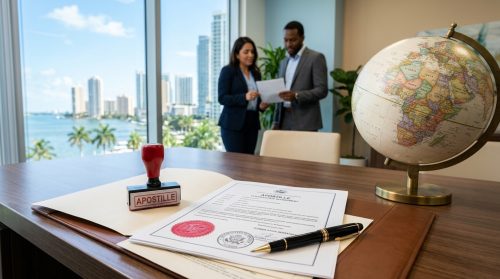
Reading time: ~7 min If you’ve ever tried to use a U.S.-issued document abroad — or a foreign document here in the United States — you’ve likely encountered the word apostille. For many Miami residents and businesses, apostille authentication is the crucial final step that makes a document legally valid across international borders. Yet it remains one of the most misunderstood parts of the document authentication process. At International Translations USA (ITU), our team handles apostille services in Miami every day — for individuals navigating immigration, corporations closing international deals, and families managing estates across countries. In this guide, we’ll walk you through exactly what an apostille is, when you need one, and how to get it done correctly the first time. Quick Summary What Is an Apostille? (And Why Does It Matter in Miami?) An apostille (pronounced “a-pos-TEEL”) is a form of authentication issued to documents for use in countries that participate in the Hague Convention Abolishing the Requirement of Legalisation for Foreign Public Documents — commonly known as the Hague Apostille Convention. As of 2026, more than 125 countries are members of this treaty, including Mexico, Spain, Brazil, Colombia, Argentina, France, Germany, Italy, and dozens more. In simple terms, an apostille is an official stamp or certificate that tells a foreign government: “This document is genuine, properly signed, and issued by a legitimate authority.” Without it, many countries will not accept your U.S. documents — no matter how authentic they are. For Miami, this matters enormously. Miami is one of the most internationally connected cities in the United States — the gateway to Latin America and the Caribbean. Our city is home to thousands of residents with ties to Venezuela, Cuba, Colombia, Brazil, Argentina, Haiti, and beyond. Every day, Miami residents need authenticated documents for: Without an apostille on the right documents, these processes grind to a halt. How the Apostille Process Works in Florida In the United States, apostilles are issued at the state level — not the federal level (with a few exceptions like FBI background checks, which go through the U.S. Department of State). For Florida documents, the apostille is issued by the Florida Department of State, Division of Corporations. Step 1: Confirm Your Document Is Eligible Not all documents can receive an apostille directly. The document must be a public document — meaning it was issued or notarized by a government official or notary public. Common eligible documents include: Step 2: Obtain a Certified Copy (If Required) For vital records like birth and marriage certificates, you typically need an official certified copy directly from the issuing government office — not a photocopy. In Florida, these are available from the Florida Bureau of Vital Statistics or the county clerk’s office. Step 3: Notarize (If Required) Private documents — like powers of attorney, business affidavits, or personal statements — must first be notarized by a Florida-commissioned notary public before they can receive an apostille. Our team at ITU works with licensed notaries to ensure this step is handled correctly. Step 4: Submit to the Florida Department of State The Florida Department of State processes apostille requests either by mail or in person at their Tallahassee office. Processing times vary: Step 5: Translation (If Required by the Destination Country) Many countries require that the apostilled document also include a certified translation into the destination country’s official language. For example, if you’re submitting a Florida birth certificate to a Spanish-language country, you’ll typically need both the apostille and a certified Spanish translation. This is where ITU’s full-service approach becomes invaluable — we handle translation, notarization, and apostille coordination under one roof, eliminating the back-and-forth between multiple vendors. When Do You Need Both an Apostille AND a Certified Translation? This is one of the most common questions our Miami team receives — and the answer depends on the destination country’s requirements. Here’s a practical breakdown: Scenario Apostille Needed? Certified Translation Needed? U.S. birth certificate for use in Mexico ✅ Yes ✅ Yes (Spanish) Florida diploma for a job application in Germany ✅ Yes ✅ Yes (German) Venezuelan marriage certificate for use in U.S. court ❌ Not applicable ✅ Yes (English) Power of attorney for a real estate transaction in Colombia ✅ Yes ✅ Yes (Spanish) FBI background check for Brazilian visa ✅ Yes (federal) ✅ Yes (Portuguese) Divorce decree for remarriage in Spain ✅ Yes ✅ Yes (Spanish) The bottom line: if your document is leaving the U.S. and heading to a Hague Convention country, assume you need an apostille. If the document is in English and the destination country uses another language, assume you also need a certified translation. If your document is coming into the U.S. from a foreign country (like a foreign birth certificate or diploma), the apostille verifies its authenticity for U.S. use — and you’ll likely need a USCIS-accepted certified translation as well. Our team can walk you through the certified translation process and what USCIS specifically requires. Documents We Handle Most Often at ITU Miami Over the years, our team has authenticated and translated thousands of documents for Miami clients. The most common include: Birth Certificates Whether you’re claiming citizenship in a parent’s home country or enrolling in a foreign school, a birth certificate apostille is among the most frequently requested. We’ve handled Florida-issued birth certificates for submission to countries across Latin America, Europe, and the Caribbean. Marriage and Divorce Certificates International remarriage, foreign estate claims, and spousal visa applications often require certified copies of marriage or divorce records — apostilled and translated for the destination country. Diplomas and Academic Transcripts Miami’s international workforce regularly needs foreign credentials authenticated for U.S. employers, or U.S. diplomas authenticated for international employers and graduate schools. We also offer academic credential evaluation services alongside translation. Powers of Attorney Miami’s strong Latin American business community frequently requires powers of attorney — often notarized, apostilled, and translated — for property transactions, corporate decisions, and estate management across borders. Brickell’s corporate corridor generates particularly high demand for these services. FBI Background Checks For foreign residency or work visa applications (especially in countries like
How to Translate Foreign Academic Credentials in Miami: A Complete Guide

Quick Summary Estimated reading time: 8 minutes If you earned a degree, diploma, or professional certification outside the United States, you already know the sinking feeling: “Will anyone here actually recognize my education?” Whether you’re applying to a graduate program at the University of Miami, pursuing a nursing license through the Florida Board of Nursing, or simply trying to land a job that matches your qualifications, the answer starts with one critical step — getting your foreign academic credentials properly translated and evaluated. Miami is uniquely positioned for this challenge. According to the U.S. Census Bureau, more than 58 percent of Miami-Dade County residents speak a language other than English at home, and nearly 40 percent of the county’s population is foreign-born. From Brickell professionals relocating from São Paulo to Doral families arriving from Bogotá, thousands of Miami residents navigate the credential translation process every year. At International Translations USA (ITU), our Miami-based team handles academic credential translations in over 120 languages — and we’ve seen firsthand how the right process makes all the difference. Why Foreign Academic Credentials Need Certified Translation U.S. institutions don’t simply accept a photocopy of your foreign diploma. The document needs to be translated into English by a qualified professional who can certify the accuracy of the translation. This is known as a certified translation — a translated document accompanied by a signed statement from the translator (or translation company) attesting that the translation is complete and accurate to the best of their knowledge. Certified translations are required by: A translation by a bilingual friend or family member — no matter how fluent — will almost always be rejected. The certifying institution needs assurance that the translation was performed by a professional with subject-matter expertise and accountability. That’s where a professional certified translation service comes in. What Documents Count as “Academic Credentials”? The term is broader than most people realize. Academic credentials include any official document issued by an educational institution, and each may need its own translation. Common documents our team translates for Miami clients include: Each document type has its own formatting conventions depending on the country of origin. A Brazilian histórico escolar looks nothing like a German Zeugnis or a Chinese 成绩单. Our linguists at ITU are trained to preserve the original formatting, grading scales, and institutional terminology so evaluators can interpret them accurately. The Credential Translation Process: Step by Step Navigating the process doesn’t have to be overwhelming. Here’s the typical workflow when you work with a Miami-based translation provider like ITU: Step 1: Gather Your Original Documents Start by collecting certified copies (or high-quality scans) of every academic document you need translated. Most agencies — including ITU’s academic translation team — accept digital scans submitted via email or a secure upload portal. If your documents are in a language that uses a non-Latin script (Arabic, Chinese, Korean, Russian, etc.), make sure the scans are clear and legible. Step 2: Certified Translation A professional translator — ideally one with experience in academic and educational documents — translates each document into English. The translation preserves: The translator then signs a Certificate of Accuracy, affirming that the translation is a true and faithful rendering of the original document. At ITU, every academic translation is reviewed by a second linguist before certification — a quality control step that catches formatting errors and terminology inconsistencies. Step 3: Credential Evaluation (If Required) Many universities and licensing boards don’t just want a translation — they want a credential evaluation from an approved agency. This evaluation compares your foreign degree to its U.S. equivalent. For example, a four-year licenciatura from a Mexican university might be evaluated as equivalent to a U.S. bachelor’s degree. The most widely accepted evaluation agencies are members of NACES (National Association of Credential Evaluation Services) or AICE (Association of International Credential Evaluators). Popular choices include: These agencies require certified English translations of all documents. Some accept translations only from approved providers — which is why using a recognized translation agency like ITU, rather than a freelance translator, matters. Our translations are accepted by all major evaluation agencies. Step 4: Notarization or Apostille (When Needed) Certain institutions, employers, or government agencies require an extra layer of authentication. A notarized translation includes a notary public’s seal confirming the translator’s identity and signature. An apostille — issued under the Hague Convention — provides international authentication recognized by over 120 countries. ITU offers both notarization and apostille services in-house, which means you don’t need to coordinate between multiple providers. Our Brickell office handles the entire chain — translation, notarization, and apostille — so your documents are ready for submission in a single visit or shipment. Common Mistakes That Delay Academic Credential Translation After processing thousands of academic translations at our Miami office, we’ve identified the mistakes that cause the most delays: How Long Does Academic Credential Translation Take? Turnaround depends on the language pair, document complexity, and service level: Service Level Turnaround Best For Standard 5–7 business days Non-urgent applications, general employment Expedited 2–3 business days Approaching deadlines, licensing applications Rush 24 hours Emergency submissions, last-minute requirements Documents in common language pairs (Spanish–English, Portuguese–English, French–English) typically process faster than those in less common languages like Haitian Creole, Tagalog, or Mandarin Chinese — though ITU maintains a network of over 3,000 linguists covering 120+ languages, so even uncommon pairs rarely cause significant delays. Why Miami Residents Choose ITU for Academic Translation Miami’s international community has specific needs that national online-only translation services often miss. Here’s what sets ITU apart for academic credential translation: Frequently Asked Questions Can I translate my own academic credentials? Technically you can, but self-translations are almost universally rejected by U.S. universities, evaluation agencies, USCIS, and licensing boards. The translation must be performed by a disinterested third party — someone who is not the document holder or a family member. Do I need to send original documents or are scans accepted? Most translation agencies, including ITU, accept clear digital scans for the translation itself. However, some credential evaluation agencies require original documents or certified copies sent directly from the issuing institution. Always confirm requirements with your target institution first. What if my university no
How to Localize Your Website for Latin American Markets: A Miami Business Guide

Miami has always been a gateway to Latin America — and in 2026, that gateway is increasingly digital. Whether you’re a Brickell-based financial firm expanding into Colombia, a Coral Gables healthcare company entering the Brazilian market, or a local e-commerce brand targeting Mexican consumers, your website is your first impression. And if that website isn’t properly localized, you’re leaving real revenue on the table. But here’s the thing most businesses get wrong: localization is not the same as translation. Simply running your web copy through a translation tool — or even hiring a competent translator — gets you only part of the way there. True website localization for Latin American markets means adapting your content, design, user experience, currency formats, legal disclaimers, images, and SEO strategy to feel native to each market. At ITU (International Translations USA), our team has helped hundreds of Miami-area businesses and national corporations successfully localize their digital presence for Latin American audiences. This guide covers exactly what that process looks like — and what you need to get right. Quick Summary Table of Contents 1. Translation vs. Localization: What’s the Difference? Translation converts words from one language to another. It’s a necessary foundation, but it doesn’t account for cultural context, regional idioms, UX expectations, or buyer psychology. Localization goes deeper. It asks: How does a user in Mexico City, São Paulo, or Bogotá actually experience a website? What colors convey trust or danger in their culture? What payment methods do they expect to see? Is a phone number in Miami’s (305) area code reassuring — or a red flag that this company isn’t really “for them”? A 2023 CSA Research study found that 76% of consumers prefer to buy products with information in their own language, and 40% said they would never buy from a website not in their language. For Latin American markets specifically, where e-commerce adoption has grown over 25% annually since 2020 (Statista, 2024), this distinction can make or break your market entry. At ITU, our linguists don’t just translate — they localize. Every project goes through native-speaking professionals who understand the cultural nuances of each target market, ensuring your message lands the same way in São Paulo as it does in Miami. 2. Latin America Is Not One Market One of the most costly mistakes businesses make is treating “Latin America” as a single, homogeneous market. It isn’t. Here are just a few of the critical differences: Country Language Key Considerations Mexico Spanish (Mexico) Formal “usted” common in business; local slang varies by region; MXN currency Brazil Brazilian Portuguese Completely separate language track from Spanish; BRL currency; LGPD privacy law Colombia Spanish (Colombia) Very formal tone; “usted” expected even in casual contexts; COP currency Argentina Spanish (Argentina) “Vos” instead of “tú”; Rioplatense dialect; different pop culture references; ARS currency Chile Spanish (Chile) Distinct Chilean slang (“chilenismos”); CLP currency; high e-commerce sophistication Miami, uniquely, serves as the commercial capital of Latin America — companies based in Brickell and Doral routinely manage operations across five or more of these markets simultaneously. That’s precisely why professional, market-specific localization is not a luxury but a strategic necessity. 3. Language & Regional Dialect Considerations Even within Spanish, there is no single “Latin American Spanish.” Key vocabulary differences can signal to a reader that your content was written for a different market — or worse, mistranslated entirely. Consider just a few examples: For B2B communications — particularly in legal, medical, or financial sectors — using the wrong register or terminology can undermine your credibility instantly. Our professional linguists at ITU are native speakers from their respective markets, which means they naturally write in the vocabulary, tone, and formality level your target audience expects. Brazilian Portuguese is an entirely separate matter. It is not a dialect of Spanish — it is a distinct language. Any business targeting Brazil must maintain a completely separate Portuguese localization track, with its own native speakers, SEO keyword research (Portuguese search terms differ significantly from Spanish), and cultural references. 4. UX, Design & Cultural Adaptation Language is only the beginning. Effective website localization for Latin American markets also requires rethinking your user experience and visual design: Color psychology varies by culture. In many Latin American markets, vibrant, warm colors convey energy and trust — while the minimalist cool-white aesthetic common in US tech products can feel sterile or impersonal. Similarly, imagery that feels diverse and relatable to a Miami audience may not resonate in markets where local representation matters deeply. Date and number formats differ. Latin America uses DD/MM/YYYY (not MM/DD/YYYY). A date written as “04/05/2026” means May 4th in the US — but April 5th throughout most of Latin America. This matters enormously for legal documents, appointments, and e-commerce order confirmations. Decimal separators also differ: many Latin American countries use a comma as the decimal separator (e.g., “1.500,00” instead of “1,500.00”). Payment methods and currency. Latin American consumers use payment methods that often don’t exist in the US market — including Boleto Bancário (Brazil), OXXO Pay (Mexico), PSE (Colombia), and local installment payment options. Showing only Visa/Mastercard can signal that your business doesn’t truly serve local customers. Mobile-first is even more critical. Mobile internet usage rates across Latin America exceed 70% of all web traffic in several countries (GSMA, 2024). Your localized site must be fully optimized for mobile — including load speed on variable bandwidth connections. 5. Local SEO for Latin American Markets A properly localized website should also be discoverable in local search results. This requires more than translating your existing SEO strategy — it means rebuilding it from the ground up for each market. Key considerations include: Many Miami businesses that work with ITU use our website and app localization services as the foundation for their LATAM SEO expansion — because accurate, culturally native copy is the prerequisite for everything else. 6. Legal & Compliance Considerations Every Latin American market has its own legal environment, and your localized website must comply with it: Our team at ITU provides certified legal translation for all of these compliance documents. Given our base in Miami’s legal corridor — steps